

We Searched a Phone Number on a Free Website. The Results Were More Detailed Than Expected.
The free OSINT tool that exposes your address, income, and more (and what you can do about it)
Last week an OSINT (Open Source Intelligence) account we follow on X posted a link to a website that does free reverse phone number lookups.
Not the kind that just tells you whether it’s a landline or cell. The kind that pulls up names, addresses, income estimates, and more.
With a family member’s permission, we ran his primary cell phone number through the site. Within seconds, the results came back:
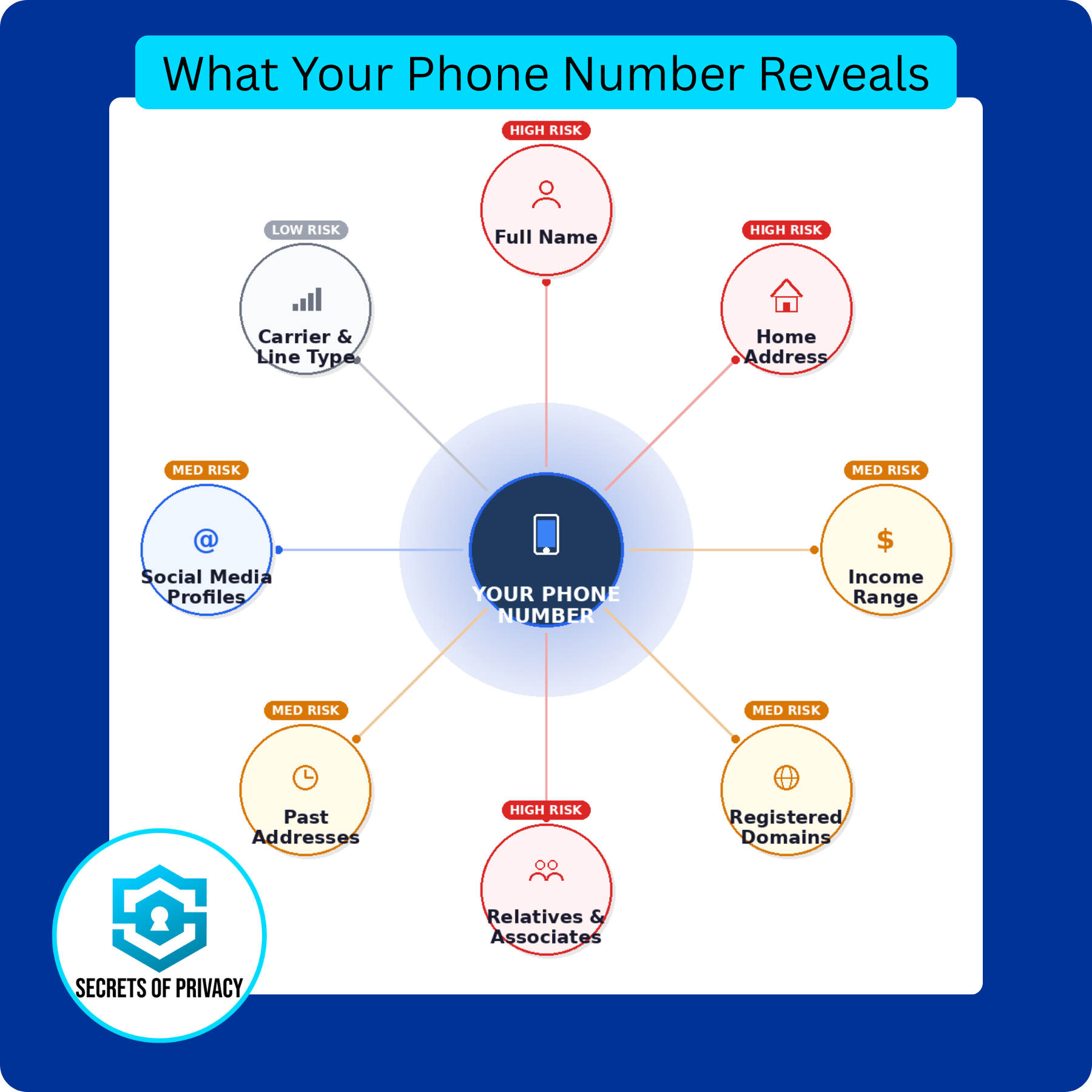
full name, home address, estimated income range, and, perhaps most unsettling, several domain names he had registered years ago (including a few that were, let’s say, not ones he’d want a coworker or client finding).
No account required. No payment. Just a phone number and a few seconds of patience. Here’s a sample from the free, no registration-required report. 👇


We name the specific site down below, and also walk you through the other tools in this ecosystem and lay out the exact steps to scrub your information from all of them.
But first, let’s talk about why this matters and who’s already using these tools in ways most people haven’t considered.
The Phone Number Problem
Your phone number is no longer just a way to reach you. It’s now a key that unlocks your entire identity.
Think about how many places have your phone number.
Your bank.
Your doctor.
Many (if not most) apps on your phone.
Every online account that uses two-factor authentication.
Every delivery service, every loyalty program, every time you’ve scribbled it on a form at a checkout counter.
Your phone number is the single most connected piece of personal data you own. And unlike an email address, which most people have several of, most people have one phone number, and they’ve had it for years.
That persistence is the problem.
A phone number is a unique, long-lived identifier that ties together your financial life, your digital life, and your physical address into one searchable package. And a growing ecosystem of websites makes all of that searchable by anyone, for free.
Who’s Actually Using This (And Why You Should Care)
The obvious fear is hackers and stalkers. But the more likely (and arguably more insidious) misuse cases are the ones most people never think about:
A potential employer. You applied for a job. The hiring manager Googles you, sure. But a quick reverse phone lookup on the number from your resume? Now they know your home address, an estimated income range (which gives them leverage in salary negotiations), and maybe your past addresses, which could reveal things about your background you didn’t volunteer.
A car salesman. You walked onto the lot and filled out a “just looking” card with your phone number. Before you’ve finished your test drive, the salesperson has looked you up, knows your approximate income, and has tailored their pitch accordingly. This isn’t hypothetical, OSINT tools are increasingly marketed for sales and lead qualification.
A date. You exchanged numbers with someone on a dating app. Before the first coffee, they’ve got your full name, home address, and whatever else the lookup returns. For most people, that’s just creepy. For someone escaping an abusive situation, it could be dangerous.
A scammer. Phone-based social engineering attacks become dramatically more convincing when the caller already knows your name, address, and approximate financial situation. “Hi, this is [your bank] calling about suspicious activity at your [your actual address]” hits differently when every detail checks out.
A neighbor, an angry commenter, a political opponent. Doxxing, the act of publicly revealing someone’s private information to harass or intimidate them, often starts with nothing more than a phone number.
This Is a Real and Growing Threat
The data broker industry, which collects, packages, and sells personal information, is enormous.
According to Grand View Research, the global data broker market was valued at roughly $278 billion in 2024 and is projected to surpass $512 billion by 2033. (source) These companies aggregate information from public records, app usage, purchase histories, and dozens of other sources, then make it available to anyone willing to pay, and in even some cases, for free.
The Privacy Rights Clearinghouse recently built a unified database by cross-referencing all five U.S. state data broker registries and identified over 750 registered data brokers. (source) Some estimates put the global total at around 5,000. (source) And that only counts the ones that bother to register.
Reverse phone lookup sites are the consumer-facing tip of this iceberg. They take the data that brokers collect, such as names, addresses, relatives, income estimates, property records, domain registrations, social media profiles, and make it searchable by phone number.
Some charge a fee. But a growing number offer basic results for free, which makes them especially dangerous. What was once the domain of professional investigators is now a hobby anyone can pick up over a lunch break.
The real-world consequences are playing out. A 2025 survey by SafeHome.org found that 77% of Americans are at least somewhat concerned about being doxxed, and personal safety fears around doxxing rose 8 percentage points year over year. (source) Yet only 25% of respondents said they’d know how to remove their personal information from the internet if they needed to.
Since 2024, doxxing and swatting incidents have increased significantly, according to the National Association of Attorneys General. (source) Texas has treated doxxing as a criminal offense since September 2023, defining it as posting someone’s private address or phone number online with intent to cause harm. But most states still have no specific anti-doxxing statute, and federal law has yet to catch up.
Our Unique Take
Here’s what most people (and most legislators) get wrong about this problem:
they frame it as a data breach issue. They talk about hackers and dark web marketplaces and stolen databases. And those things are real threats.
But the reverse phone lookup problem isn’t a breach. It’s a feature. This data isn’t stolen (at least not always). It’s collected legally, packaged commercially, and served up through a clean user interface with a search bar.
That distinction matters. It means the standard advice of “use strong passwords,” “enable two-factor authentication”, doesn’t help here. No password was compromised. No account was hacked. Someone just typed a phone number into a website, and the data broker ecosystem did the rest.
The rise of AI is about to make this worse, not better.
When someone can feed a phone number into a lookup tool, get a name and address, then hand that information to an AI that cross-references it across social media, public records, and breach databases in seconds, the amount of personal information extractable from a single phone number grows exponentially.
We’re not there yet for the average person, but we’re closer than most people realize.

So What’s the Solution?
The good news is that this is a solvable problem, for those who know where to look and what steps to take. There are specific actions that remove your information from these databases, reduce your exposure, and make your phone number far less useful as an identity key. There’s even a brand-new government tool, launched just weeks ago, that makes part of this dramatically easier.
The data broker industry deliberately makes the opt out process confusing, fragmented, and tedious.
Below, we cut through all of that. We’ll name the specific reverse phone number site noted earlier, the other major tools in this ecosystem, and walk through the exact removal steps for each one.
The Reverse Phone Number Site (And What It Found)
