

Our post earlier in the week covered the hidden data in your photos and how it can expose your location, device, and routines to anyone who knows where to look. Here’s the post:

Afterwards, we received a great question from a reader:
is there an easy way to strip this data automatically from email?
If you use Proton Mail, there is.
Proton Mail has a built-in feature that removes metadata from image attachments before you send them. There are no extra apps and no manual steps. Just flip a switch in your settings once and it handles the rest indefinitely.
If you’re a Proton Mail user, here’s how to enable it:
On desktop: Settings > Messages and composing > Composing > Enable “Remove image metadata”
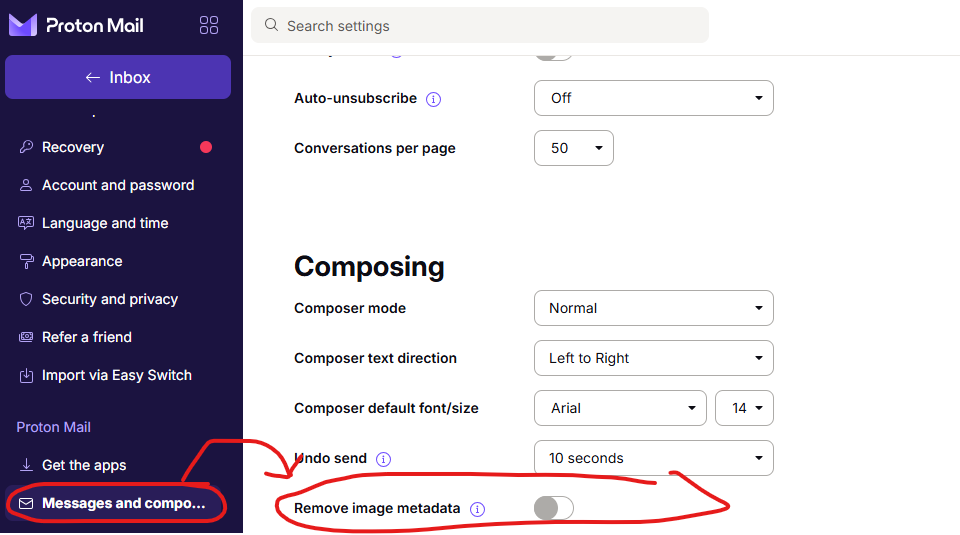
On Mobile: Settings > Account settings > Privacy > Enable “Remove image metadata”
Once it’s on, every photo you attach will have its GPS coordinates, device info, and timestamps stripped out automatically before sending. And if you make the change in one place (desktop or mobile), it automatically carries through to all your devices and Proton Mail instances.
One caveat:
This only works for email attachments through Proton Mail. If you share photos via Proton Drive links, the metadata stays intact. For those, you’ll still need to strip metadata manually before uploading, or use one of the other methods covered in the original post.
Not a Proton Mail user? Give it a try here for free (affiliate link).
And if you’re not up for switching to Proton Mail, the tips from last week still apply:
Consider disabling location tagging in your camera settings
use apps like Metapho (iPhone) or Scrambled Exif (Android) to remove metadata before sharing
Take a screenshot of the photo and send that instead.
And while stripping metadata is a great start, email privacy strategy goes deeper than attachments.
Our Inbox Firewall guide walks you through how to bulletproof your email with disposable email addresses. Get 25% off with coupon code 6N3FQ66 or click the image below 👇

Small steps like these help you become a harder target for scammers, doxxers and Big Tech data harvesters.
Friendly Ask
If you found this helpful or informative, chances are your friends and family will as well. Please share it with them to help spread awareness.
Looking for help with a privacy issue or privacy concern? Chances are we’ve covered it already or will soon. Follow us on X and LinkedIn for updates on this topic and other internet privacy related topics.
Disclaimer: None of the above is to be deemed legal advice of any kind. These are *opinions* written by a privacy and tech attorney with decades of working for, with and against Big Tech and Big Data. And this post is for informational purposes only and is not intended for use in furtherance of any unlawful activity. This post may also contain affiliate links, which means that at no additional cost to you, we earn a commission if you click through and make a purchase.

Privacy freedom is more affordable than you think. We tackle the top Big Tech digital services and price out privacy friendly competitors here. The results may surprise you.
Do you own a Smart TV? If so, you won’t want to miss this post from our three part series on How To Make Your Smart TV Less Creepy.

If you’re reading this but haven’t yet signed up, join for free (3.8K+ subscribers strong) and get our newsletter delivered to your inbox by subscribing here 👇
“use apps like Metapho (iPhone) or Scrambled Exif (Android) to remove metadata before sharing”
Gold! These really can do a lot too preserve privacy. Great post. Direct and to the point with actionable advice :)
I never knew Proton Mail could be set to remove the EXIF data from photos. I'm a big fan of ProtonVPN. I must start using my Proton Mail and Proton Drive more.